Move Better Between Meetings

Today we’re exploring desk and chair stretch breaks for remote workers, turning the minutes between messages into meaningful movement. Learn practical, research-informed microflows you can perform on your chair and at your desk to revive posture, relieve tension, refresh focus, and sustain creativity without equipment, special clothing, or complicated routines.

Why Micro-Movements Matter

Hours of uninterrupted sitting strain spinal discs, tighten hip flexors, and slow circulation, which quietly depletes mood and problem‑solving capacity. Brief, intentional movement bursts reverse those effects by hydrating tissues and rebalancing posture. Many readers report fewer headaches and steadier focus after weeklong experiments with two-minute desk and chair breaks every hour.

Set Your Space for Easy Breaks

Small workspace tweaks make stretching irresistible. Seat height aligning hips slightly above knees encourages active sitting and effortless transitions. Clearing forearm space, sliding the chair back six inches, and angling the screen lets you extend, rotate, and hinge safely. Add water nearby and a visible timer to reinforce consistency.

Chair Checkpoints

Choose a chair with stable legs, a supportive backrest, and enough clearance to slide your hips forward during seated folds. If wheels roll, engage a brake or park against a wall. A folded towel can personalize lumbar contact, easing transitions between emails and restorative micro-movements.

Desk, Screen, and Keyboard

Keep your desk clear at shoulder width so elbows can glide during chest stretches. Position the monitor so your chin stays level when you sit tall. Dock external peripherals if needed, then nudge them aside quickly when you stand, hinge, or rotate to renew circulation every hour.

Five-Minute Seated Flow

This quick sequence fits between back-to-back meetings without changing clothes or camera angles. You will mobilize neck, spine, hips, and wrists while seated, then reset breathing. Follow the pace, notice sensations, and write a quick note afterward to reinforce learning and personalize your favorite anchors.

Neck and Shoulders Unwind

Sit tall. Inhale to lengthen, exhale to drop the right ear toward the shoulder, then trace small half-circles. Interlace fingers, press palms forward, and glide shoulder blades down as elbows float. Two slow rounds plus three deep breaths often erase the heaviness that creeps in after intense typing.

Spine and Hips Mobilizer

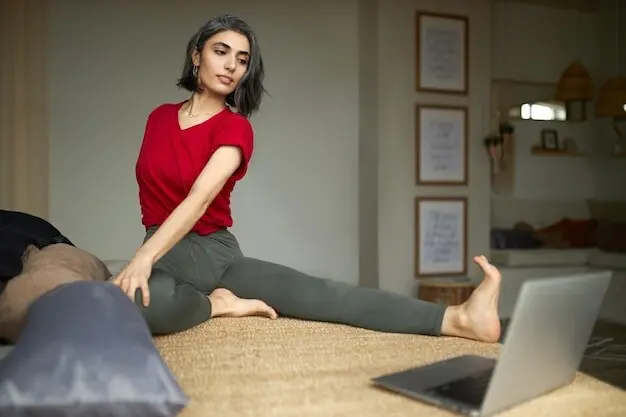
Plant your feet, hold the seat edges, and alternate seated cat and cow with generous breaths. Add a gentle twist to each side, then cross one ankle over the opposite knee for a figure-four stretch. Keep the back long, hinge forward, and ease sensation without forcing angles.

Calves and Hamstrings Reset

Place hands on the desk, step one foot back, and bend the front knee to stretch the rear calf. Swap sides, then rest your heel on the chair for a gentle hamstring fold, keeping your spine long. Muscles feel springier, and walking to refill water becomes smoother.

Chest and Upper Back Opener

Stand an arm’s length from the desk, place forearms on its edge, soften knees, and hinge hips back to open the chest. Add slow thoracic rotations, following your fingertips with your eyes. This counters laptop rounding, refreshes breathing, and brings a surprising surge of calm attention.

Make It Stick on Busy Days

Camera on? Keep it subtle. Slide to the chair’s front edge, lengthen your spine, drop shoulders, and breathe slower than you speak. Under the desk, alternate ankle pumps and gentle glute squeezes. After the meeting, jot one line about your energy shift to reinforce the habit loop.
While coffee brews, do seated side bends and wrist circles. After clearing five emails, stand for a calf stretch and shoulder opener. Consistency grows when you attach movement to anchors already present. Share your favorite pairings in the comments so others can borrow, refine, and cheer your creativity.
Propose a Friday stretch lottery where one person chooses a two-minute sequence for everyone. Track participation with friendly emojis, not guilt. Accountability nudges momentum, and laughter builds belonging. Tell us how your group experimented this week, and we will feature creative ideas in a future roundup to inspire newcomers.

Listen to Signals

Sensation should feel like gentle lengthening, warmth, or pressure that eases with breath. Stop if tingling spreads or joints feel unstable. Replace aggressive pulls with micro-movements and supportive props. Write down what felt helpful today so tomorrow’s breaks honor your body’s feedback rather than internet bravado or pushy comparisons.

Adaptive Options for All

If standing is tricky, keep everything seated: ankle pumps, figure‑four variations, towel-assisted chest openers, and supported twists. If shoulders are sensitive, lower the arms and expand through the back. Progress gradually with shorter holds, slower breaths, and add repetitions later as comfort grows and curiosity leads the way.
Daririnopentozorifarizento
Privacy Overview

This website uses cookies so that we can provide you with the best user experience possible. Cookie information is stored in your browser and performs functions such as recognising you when you return to our website and helping our team to understand which sections of the website you find most interesting and useful.